
The Go-Live Illusion: Why Deployment Dates Do Not Equal Operational Success
Healthcare COO and CIO are you aware that your go-live date is the last time your technology and clinical needs aligned? Healthcare IT departments are obsessed with go-live dates, but go-live isn’t a victory. It’s merely the starting line.
Healthcare IT departments operate on strict project timelines to control costs at scale. You buy a tool, you install it, you train the staff and then you mark the project as “done”. Buy-install-train-repeat works great if what you install solves a well-known and simple problem, like a phone system.
Unfortunately, a four-step process to install a phone system doesn’t protect operating margins when applied to specialized clinical tools, like practice-specific EHR optimizations or ambient scribes. Why? Clinical workflows are dynamic. Patient behavior changes. Regulatory guidelines evolve.
These compliance and behavioral changes represent only half of the challenge. The deeper reason the buy-install-train-repeat cycle fails to scale in healthcare is the human factor. As your providers interact with their clinical tools, their use becomes more sophisticated with each encounter. They see opportunities on how to improve the delivery of care. This generates feedback.
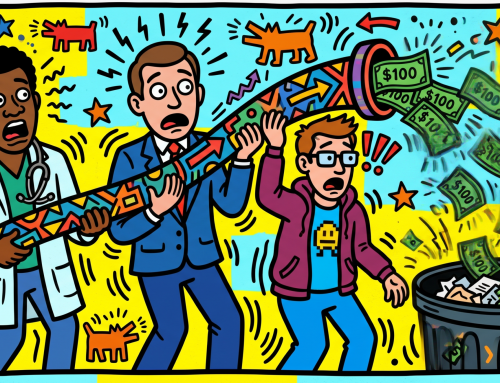
All of this information needs to be captured, evaluated and acted upon. But for ticket-driven healthcare IT departments, this feedback goes into a black hole. Once the project is marked “done”, the project team is disbanded. There is no one there to listen to your providers.
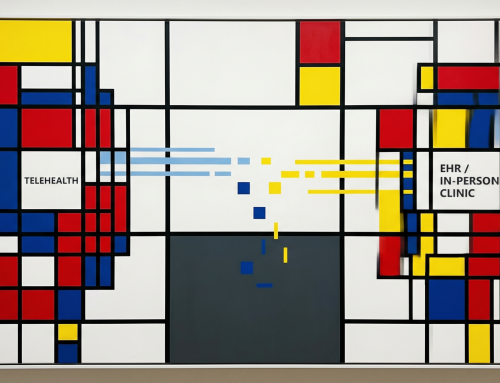
This friction reveals a deeper structural silo between informatics and healthcare IT departments. Informatics possesses deep clinical insights but remains isolated from the process. Without a product governance model, clinical workflow updates are treated as isolated software modifications that reside at the bottom of an IT backlog.
End result: providers and patients are stuck with clinical tools that describe a need and environment that was documented twelve months ago. Because there is no formal cadence to review and evaluate feedback, the tools do not evolve.
To overcome this impediment, health systems must make the project-to-product shift. This transition requires your health system to execute five changes:
- Put your providers, and patients, at the center of your design process.
- Fund stable, cross-functional teams dedicated to supporting clinical workflows.
- Work backwards from operational bottlenecks to deliver optimized solutions for providers and patients.
- Establish continuous feedback loops to evolve your systems and tools.
- Measure adoption, operational lead time and ROI.
If you’re ready to protect operating margins and ditch the check-the-box project mentality, schedule a discovery call. I help health systems between $200M and $700M ARR build a strategic product playbook to ensure that your technology investments continue to deliver ROI long after the initial go-live date.